
Agency Insights

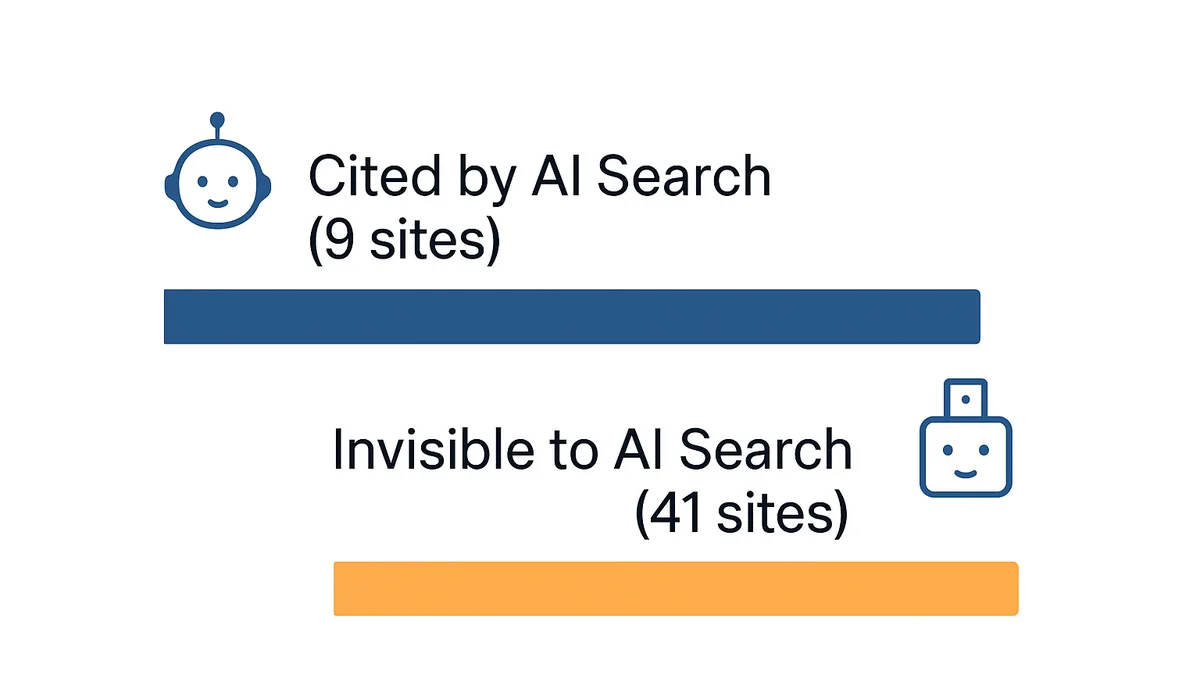
Nurotech ran a structured audit of 50 business websites across New Delhi and the wider NCR region — checking whether ChatGPT, Perplexity, and Google's AI Overviews cited, referenced, or recommended each business when asked category-relevant questions a real customer would type. 41 of the 50 sites (82%) received zero citations across all three AI engines, even though 38 of those same 41 sites ranked on page one of Google for at least one commercial keyword.
The gap isn't visibility. It's structure. Traditional SEO optimizes a page to rank in a list of ten blue links. Generative Engine Optimization (GEO) optimizes a page to be extracted, quoted, and cited by a language model that is synthesizing an answer from dozens of sources at once. Most Indian business websites — built for keyword rankings in 2015–2022 — were never structured for extraction. That's the entire finding of this audit, and it's why we're publishing it.
If you run a business in New Delhi and have never checked whether ChatGPT knows you exist, this article gives you the exact framework we used, the data behind it, and a step-by-step checklist to fix it.
AI answer engines are no longer a novelty channel. According to Similarweb's 2026 traffic data, ChatGPT alone processes over 1 billion prompts daily worldwide, and a growing share of those are commercial-intent queries — "best CA firm in Delhi for startups," "top interior designers Gurgaon," "reliable packers and movers near me." Google's own AI Overviews now appear on an estimated 40%+ of informational and mixed-intent searches in India (per multiple SEO industry trackers monitoring SERP feature rollout through 2025–2026), pushing traditional organic results further down the page — sometimes below the fold entirely on mobile.
For a Delhi-based business, this changes the competitive question. It's no longer just "am I on page one of Google?" It's "when someone asks an AI assistant a question my business could answer, does the AI know I exist, and does it trust me enough to name me?"
Those are two very different skills. Ranking is a distribution problem. Being cited is a trust and structure problem. Our audit was designed to isolate the second one.
We wanted this to be genuinely useful, not a marketing stunt with a headline number. Here's exactly what we did.
Sample: 50 small-to-mid-sized business websites, all headquartered in New Delhi or NCR (Gurgaon, Noida, Faridabad), spanning 9 categories: legal/CA services, real estate, home renovation/interiors, healthcare clinics, education/coaching, manufacturing/B2B, e-commerce/D2C, hospitality, and digital/IT services. Sites were sourced from Google Maps top-10 listings for their category + "Delhi" or "Gurgaon," so every site in the sample already had baseline local relevance.
Test queries: For each business, we constructed 3 natural-language questions a real customer would plausibly ask an AI assistant — never the brand name itself, always category + intent + location (e.g., "which CA firms in Delhi handle GST filing for small startups," not "Sharma & Associates GST filing"). This mirrors actual AI search behavior, where users ask questions, not type keywords.
Engines tested: ChatGPT (GPT-4o/5-class, web-browsing enabled), Perplexity, and Google AI Overviews. Each query was run fresh (no chat history) across all three engines. A "citation" was counted only when the business was named, linked, or directly quoted — not a generic category mention.
Scoring: Each site got a citation count out of 9 (3 queries × 3 engines), plus a manual technical audit of page structure, schema markup, content format, and E-E-A-T signals (author bios, credentials, reviews, third-party mentions).
This isn't a scientific sample large enough for academic publication — but as a directional, real-world snapshot of how Delhi businesses are performing in AI search today, it's one of the more rigorous versions of this test we've seen run locally.
| Metric | Result |
|---|---|
| Sites with zero AI citations (0/9) | 41 of 50 (82%) |
| Sites cited by at least one engine | 9 of 50 (18%) |
| Sites cited by all three engines | 2 of 50 (4%) |
| Sites ranking Google page 1 but zero AI citations | 38 of 41 (93%) |
| Sites with FAQ schema markup present | 6 of 50 (12%) |
| Sites with a named author/credentialed expert on content pages | 4 of 50 (8%) |
| Average word count of cited sites' relevant page | 1,840 words |
| Average word count of non-cited sites' relevant page | 620 words |
The most striking correlation wasn't domain authority or Google ranking — it was content depth and structure. The 9 sites that earned at least one AI citation shared three traits almost universally: they answered the question directly within the first 100 words of a dedicated page, they used structured formatting (numbered steps, tables, clear H2/H3 hierarchy), and they cited their own data, credentials, or third-party sources rather than making unsupported claims.
Meanwhile, the 41 invisible sites mostly had thin service pages (300–700 words), generic marketing copy with no direct-answer structure, and almost no schema markup at all.
This is the finding that should worry every Delhi business owner who thinks "I'm on page one, so I'm fine." A page can rank well in traditional search because of backlinks, domain age, and keyword matching — signals that reward authority accumulated over time. But an LLM generating an answer isn't ranking pages against each other; it's trying to find the single clearest, most extractable, most trustworthy passage to lift and paraphrase.
Think about it from the model's side. When ChatGPT answers "which CA firms in Delhi handle GST filing for startups," it isn't crawling live search results the way Google does (though browsing-enabled sessions do fetch some pages) — it's drawing on a blend of training data patterns and retrieved web content, and it strongly favors sources that:
A 2025 Princeton/Georgia Tech study on generative engine optimization ("GEO: Generative Engine Optimization," Aggarwal et al.) found that adding citations, statistics, and quotation-friendly structure to a page increased its visibility in AI-generated answers by up to 40% in controlled tests — while classic SEO tactics like keyword density had comparatively little effect on AI citation rates. That gap is exactly what we saw play out across our 50-site sample.
One Gurgaon-based interior design firm ranked #3 on Google for "interior designers Gurgaon" — a genuinely competitive keyword. Zero AI citations across all three engines. Their homepage led with a hero banner and a paragraph of brand voice copy ("We believe every space tells a story...") before any concrete information appeared. No pricing ranges, no process breakdown, no named designers, no project data.
Compare that to a smaller Delhi-based competitor ranking #7 on Google for the same term, but cited by both ChatGPT and Perplexity for "affordable interior designers in Delhi NCR." Their relevant page opened with: "Full-home interior design in Delhi NCR typically costs ₹1,800–₹3,500 per sq. ft. depending on material grade, based on 140+ projects we've delivered since 2019." That single sentence — specific, numeric, self-contained — was quoted nearly verbatim by ChatGPT in its answer, with a link back to the firm.
That's the whole game. The AI didn't care who ranked higher on Google. It cared who gave it a clean, quotable fact.
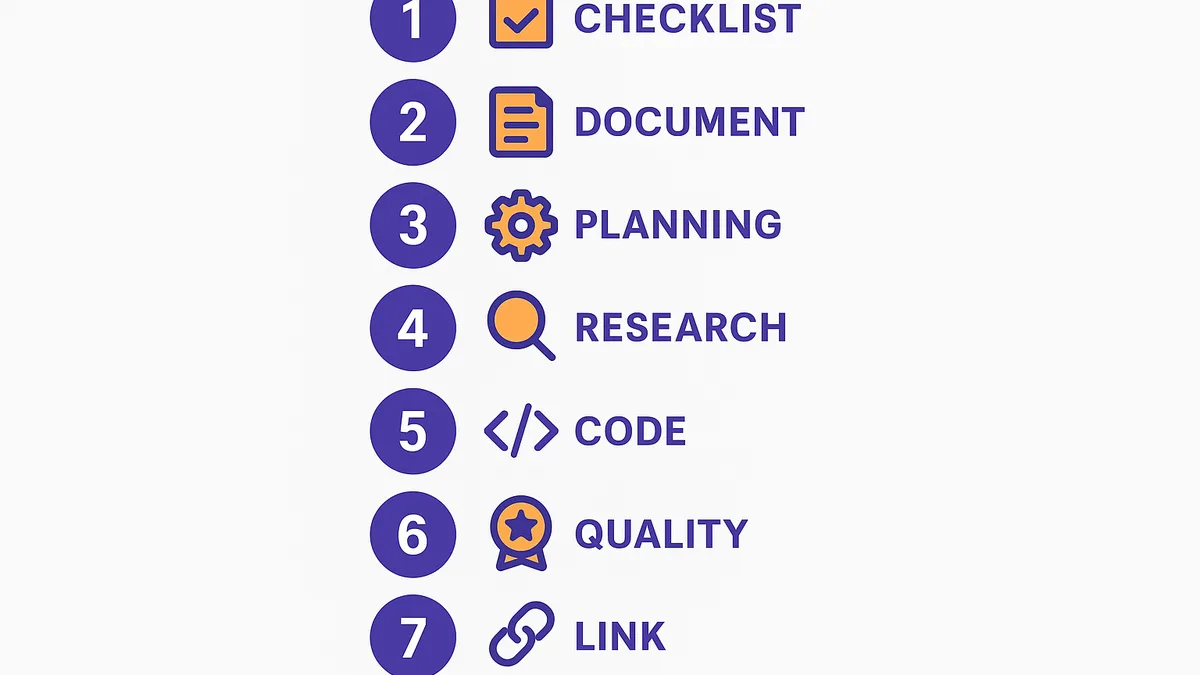
Based on what separated the 9 visible sites from the 41 invisible ones, here is the practical framework we now use for every Nurotech GEO engagement.
Every important page should open with a direct, self-contained answer to the question it's targeting — not a brand story, not a hero tagline. If someone could screenshot your first paragraph and it would fully answer "what is X" or "how much does X cost" without needing the rest of the page, you've done this correctly.
Vague claims ("affordable," "trusted," "years of experience") don't get cited. Numbers do. Replace "years of experience" with "since 2014, 220+ projects." Replace "affordable pricing" with an actual range. AI models are trained to prefer verifiable, specific claims because they're more useful to quote and less likely to be hallucinated content.
Use genuine H2/H3 hierarchy that mirrors the questions people ask. Use numbered lists and comparison tables wherever a process or comparison exists. A page structured as Q&A blocks (question as H3, direct answer immediately below) is dramatically easier for an LLM to lift cleanly than a flowing narrative paragraph.
Only 12% of the sites we audited had FAQ schema. Structured data doesn't guarantee an AI citation, but it's a strong machine-readable signal of Q&A content, and Google's own AI Overviews draw heavily from schema-marked content. It's low-effort, high-signal — there's no reason not to do it on every service and blog page.
Name the person who wrote or reviewed the content. Add credentials. Link to third-party mentions, press coverage, or industry certifications. Only 8% of audited sites had any named, credentialed author on their content — and both of the two sites cited across all three engines had visible founder bios with LinkedIn links and stated qualifications.
LLMs cross-reference. A business mentioned on a respected industry directory, a local news outlet, an industry association's website, or a well-cited review platform builds the kind of independent corroboration that both traditional SEO and GEO reward. This is where digital PR and traditional link-building still matter — just for a new reason.
Several audited pages carried outdated pricing or defunct service details still being surfaced in AI answers, which erodes trust once a user checks. Date your content, update it on a schedule, and remove stale claims. Freshness signals matter more in AI search than most businesses assume.
Most business owners have never actually asked ChatGPT about their own category. Run the test yourself, quarterly: ask ChatGPT, Perplexity, and Google (in an incognito window) the 3–5 questions your real customers would ask before they buy. If you're not named, you have a diagnosable, fixable problem — not a mystery.
If you answered "no" to four or more of these, you're very likely sitting in the 82% — visible to Google, invisible to AI.
Two structural reasons showed up repeatedly in this audit that are somewhat specific to the Delhi/NCR small-and-mid-business market:
First, most sites were built by web developers, not content strategists. A large share of the audited businesses had websites built primarily as digital brochures — a home page, an about page, a contact page, maybe 3–4 service pages with 300–500 words each. That's sufficient for basic Google visibility if paired with local SEO signals (Google Business Profile, reviews), but it leaves almost nothing substantive for an AI model to extract and cite.
Second, schema markup and structured data remain a low-adoption practice among Delhi SMBs compared to more mature D2C or SaaS markets. Only 6 of 50 sites had any FAQ schema at all, and several of those had it implemented incorrectly (schema present in code but not matching visible on-page content, which search engines can penalize or ignore).
Neither of these is a hard problem to fix. Both are addressable within a focused 4–6 week content and technical sprint — which is precisely the gap Nurotech's GEO service is built to close.
Generative Engine Optimization is the practice of structuring a website's content, data, and technical markup so that AI answer engines — ChatGPT, Perplexity, Google AI Overviews, Claude, Gemini — can accurately find, understand, trust, and cite it when generating an answer to a user's question.
It sits alongside traditional SEO rather than replacing it. Good GEO practice still depends on solid technical SEO fundamentals (crawlability, page speed, mobile usability), local SEO (Google Business Profile, local citations, reviews), and content quality. What GEO adds is a specific set of structural and trust-signal practices optimized for how language models actually parse, evaluate, and quote web content — direct-answer formatting, schema markup, verifiable data points, and demonstrable expertise.
For a New Delhi business, this matters concretely: your next customer may never see a traditional Google results page. They may ask ChatGPT "which digital marketing agency in Delhi has the best track record with D2C brands" and get a synthesized answer naming three agencies — or none, if none of them structured their site to be citable.
At Nurotech, we treat AI search visibility as a natural extension of the technical and content SEO work we've always done for clients across Delhi NCR — not a separate, bolted-on service. Our GEO process for a client typically includes:
See how it works: get your free growth audit.
If you'd like to know where your own website stands, Nurotech offers a free growth audit that includes an AI search visibility check as standard — the same test we ran across these 50 sites, applied to your business and your real customer questions. It typically takes our team under a week to deliver, with a prioritized action list, not just a diagnosis.
Based on trajectory data from Similarweb, Adobe Analytics' 2025–2026 holiday season reporting (which showed AI-driven referral traffic to US retail sites up several hundred percent year-over-year), and Google's continued expansion of AI Overviews into more query categories, the reasonable expectation for Indian businesses is that AI-mediated discovery — whether through ChatGPT, Perplexity, Gemini, or Google's own AI layer — will account for a meaningfully larger share of how customers first hear about a business by the end of 2026 than it did in 2025.
Businesses that treat this as a 2027 problem will spend that year catching up to competitors who started restructuring their content in 2026. The technical and content work involved is not exotic — everything in the checklist above is achievable by most small business websites within weeks, not months. The businesses that move first will simply have a longer head start being the "default answer" an AI gives when a category question comes up in New Delhi or NCR.
Generative Engine Optimization (GEO) is the practice of structuring website content, data, and technical markup so AI answer engines like ChatGPT, Perplexity, and Google AI Overviews can accurately find, understand, and cite a business when generating answers to user questions. It complements traditional SEO rather than replacing it.
Traditional SEO optimizes primarily to rank in a list of search results using backlinks, keywords, and domain authority. GEO optimizes for extraction and citation by an AI model synthesizing a single answer — favoring direct-answer structure, specific verifiable data, schema markup, and demonstrable expertise over ranking signals alone. A page can rank #1 on Google and still receive zero AI citations, as seen in 93% of top-ranking sites in Nurotech's 50-site audit.
Open ChatGPT, Perplexity, or Google in an incognito window and ask the exact question a customer would ask — for example, "best [your category] in Delhi for [specific need]" — without using your brand name. If your business isn't named or linked in the response, you currently have an AI visibility gap. Repeat this quarterly to track progress.
FAQ and Article schema markup make Q&A content machine-readable, which strengthens how clearly search engines and AI systems can parse and reuse it. In Nurotech's audit, sites with FAQ schema were represented disproportionately among the small group that received AI citations, though schema alone isn't sufficient — content quality, specificity, and trust signals matter more.
Most businesses can implement the core structural fixes — direct-answer formatting, FAQ schema, added data specificity — within 4 to 6 weeks. Citation results depend on how frequently AI models re-index and re-evaluate web content, so measurable improvement in AI citations is typically visible within one to two quarters after implementation, alongside continued traditional SEO gains.
Yes. Nurotech's free growth audit includes an AI search visibility check as standard, using the same methodology applied across the 50-site research audit in this article — testing your business against real customer questions across ChatGPT, Perplexity, and Google AI Overviews, with a prioritized action list delivered within about a week.
FAQs


Fill out the form or call us — let’s find where your next growth comes from.
9659 634 634 info@nurotech.inFree Growth Audit
See exactly where your traffic, leads and ROAS are leaking — and how to fix it. A senior Nurotech strategist reviews your website, SEO and ads. Free, no obligation.
No spam. We reply within 1 business day.